
Beneath the tactical bravado and armchair predictions lies the founding heartbeat of our Entourage: a genuine desire to look past the stats and build actual empathy for the gladiators navigating professional tennis. Through the lens of our own chaotic data and the physical trauma unfolding on television, we've been forced to look at the game with a newfound sense of reverence.
This season, what appeared to be just another routine shift from the hard courts to the red dirt instead delivered a profound, visceral reality check. As Paris bakes in an unprecedented, suffocating heatwave, our flawless predictions have completely melted away. What felt like an invincible lead for our league's top two contestants, locked in a stubborn stalemate due to the backing of Numero Uno Jannik Sinner by almost all contestants, evaporated overnight with Sinner's shocking second-round collapse. Much like the actual French Open draw, which has suddenly paved an unobstructed, chaotic sprint to the final for virtually everyone in the top half, while offering a realistic path to Novak's 25th Grand Slam or Zverev's 1st from the bottom half, Entour's own leaderboard has fractured. Suddenly, the season's race has been blown wide open with at least six contestants gunning for the top spot. It doesn't get more thrilling than this as we head into the high-stakes final week of the Red Crusade.
The Shocking Math of Attrition
The sheer volume of human effort required on dirt became undeniably clear the moment we looked at the accumulated metrics. Even when you completely strip away the massive winner points yet to be awarded for the Roland Garros crown, this clay swing's scoreboard mileage significantly exceeds that of the Australian Open hard-court stretch.
What does that tell us? The clay season is a marathon of attrition that breaks the body down bit by bit. While the hard-court summer rewards the explosive, first-strike artists, the European clay swing demands a relentless, agonizingly sustained output over weeks of heavy rallies. Seeing this mathematical disparity hammered home just how much physical and mental capital these athletes burn before they even step foot into a Grand Slam stadium.
Living in the Unpredictable Chaos
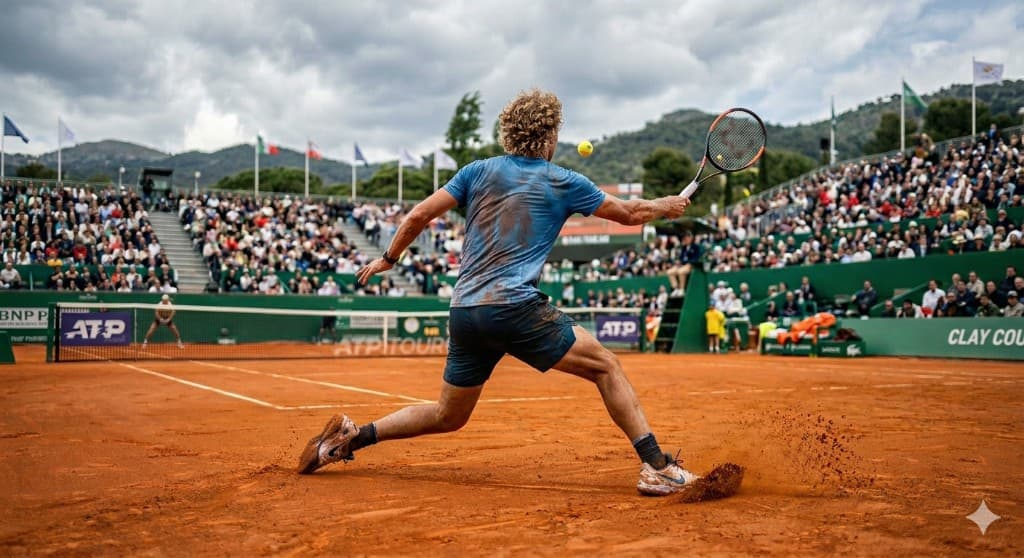
It is one thing to intellectually accept that clay is the toughest surface on earth; it is another to watch the variables actively tear the tour's hierarchy apart. Clay is a living, breathing canvas of chaos. You have the physics of bad bounces, heavy topspin that kicks violently above the shoulder, and the sheer exhaustion of having to slide into every single stroke.
Then, you add the environmental volatility. At Roland Garros, we are watching a tournament transformed into a psychological pressure cooker. The extreme heat has completely altered the court speed, turning the crushed brick into a fast, high-bouncing deck that has left favorites completely exposed. We've already seen the physical toll take center stage: from Jakub Mensik collapsing flat on the clay from exhaustion and needing a wheelchair just to leave the court, to the terrifying moment a ball girl collapsed from heat stroke and had to be rushed off for emergency treatment.
When a "surefire" pick falls in our league, or an unseeded grinder disrupts the draw, we now know it isn't a fluke. It is the natural consequence of a surface designed to test a human being's breaking point.
Redefining the "Clay Court Specialist"
For years, mainstream tennis journalism has weaponized the term "clay court specialist" with a subtle, dismissive reductionism. They treat mastering the dirt as a technical crutch rather than the ultimate physical mountain to climb, while counting Björn Borg and Rafael Nadal as exceptions rather than the norm. This season's brutal reality check should permanently shatter that arrogant narrative.
To survive, let alone thrive, on this surface requires a completely different tier of tactical intelligence, supreme aerobic conditioning, and an almost frightening level of emotional resilience. Watching modern players channel the relentless spirit of Gustavo Kuerten and Thomas Muster, sliding with millimeter precision, adjusting to sudden elevation changes across the European tour, and battling through four-hour, sun-baked matches day after day, should do more than just shift our fantasy standings. It should vastly increase our respect for these athletes. They aren't just specialists; they are gladiators of the sport's most punishing discipline.
The Takeaway
At the end of the day, this swing has been a humbling reminder that winning on clay simply takes more of everything: more physical endurance, more mental fortitude, and more tactical patience. The next time we cheer for these players on the red dirt, we won't just be watching a match; we will relate to their struggles with a much deeper, firsthand appreciation for what they are enduring. If we all can look past the leaderboards to find that kind of perspective, then Entour will have moved one step closer to its true intent.